Clearance to an Occupied Pier
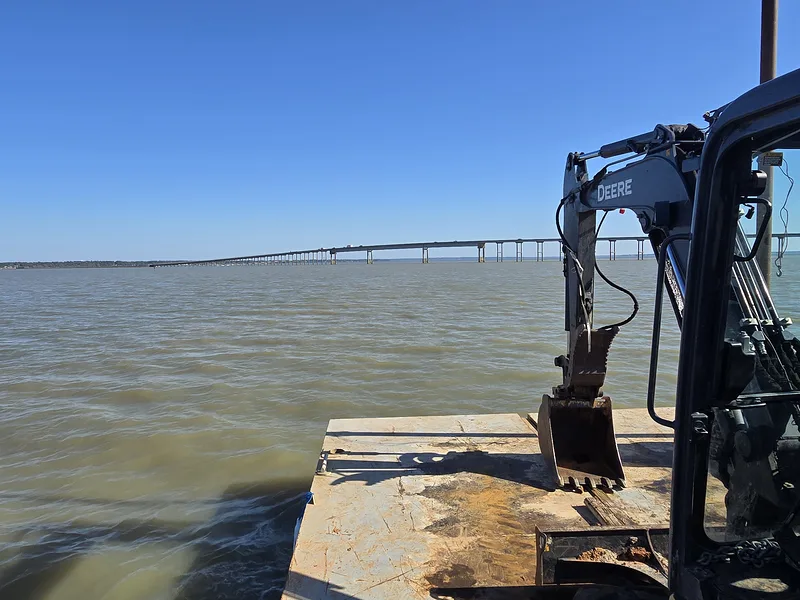
An excavator arm works to a drawn limit from a fixed barge position. A full-size cutterhead's anchor and swing pattern generally will not tolerate a finger pier with boats on it.

Every dredging contractor says they will phase around your season. The useful conversation is more specific: which blocks come out in which weeks, where the discharge line crosses the fairway, and which approach cannot be taken out of service at all.
Not by what is worst, and not by what is easiest to reach. By what the whole marina depends on.
A basin is not one asset, it is a set of them with very different exposure. The access channel and the fuel dock approach serve everybody and have no substitute — if either shoals below working depth the whole operation is affected at once, so they go first, and on the tightest maintenance interval afterwards. Interior slips are the opposite case: a tenant in a shallow slip can usually be put in a different one for a few weeks, which is precisely why interior water can wait and be taken in blocks.
That reordering is the single most useful thing an operator can take from this page. It converts a lump-sum basin quote into a sequence with priorities you can defend to an owner, a board, or a bank — and it usually means the urgent portion is far smaller than the whole.
Not from ours. A phasing plan that ignores which slips are empty in which weeks is a schedule, not a plan.
Phasing a live basin means relocating tenants within the marina rather than sending them away, and that is only possible if the sequence is drawn against the weeks you already know a block will be light. Seasonal turnover, annual haul-outs, a wing that empties after Labor Day — those are the inputs. Give us the calendar and the block order tends to write itself.
Two constraints shape it. First, a block whose only route to open water runs past the block being worked cannot be counted as in service, however empty the dredge looks from the office. Second, silt curtain placement is what lets the neighbouring block stay open at all, so the curtain line is drawn at the same time as the block order rather than afterwards.
An excavator arm works to a drawn limit from a fixed barge position. A full-size cutterhead's anchor and swing pattern generally will not tolerate a finger pier with boats on it.
A floating discharge line cannot be crossed by traffic; a submerged run can, at more setup. Where the line meets the fairway usually decides the whole layout.
Turbidity control is what allows an adjacent block to trade while its neighbour is worked, and it is a permit condition as often as a courtesy.
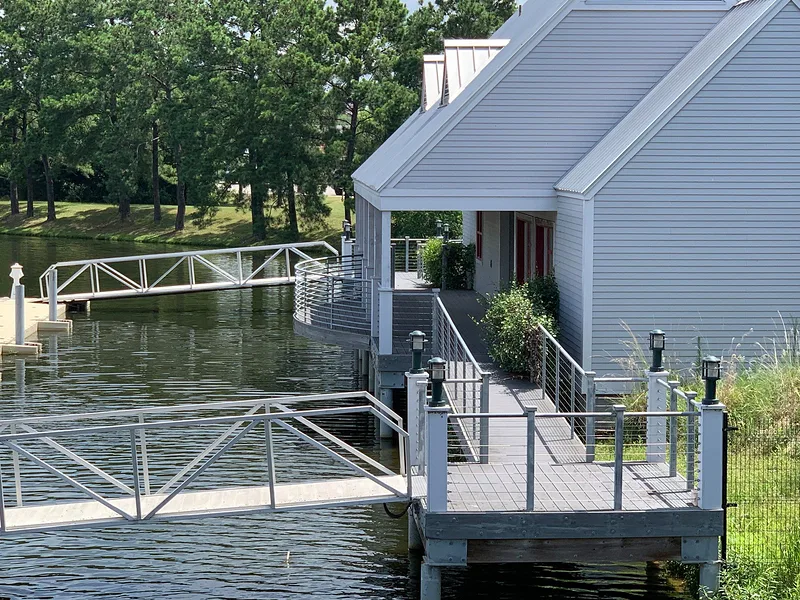
Fixed piers and covered slips stand on piles driven for the bottom that was there. The cut is drawn around them rather than through them.
Off-season work is genuinely better, and the reason is worth stating honestly rather than dressing up as a seasonal offer. A nearly empty basin can be taken in large contiguous blocks instead of many small ones. Fewer block changes means fewer barge moves, fewer curtain resets and fewer tenant relocations, and the whole job spends less time on site. It also stops the dredge competing with your best trading weekends for the same stretch of water.
What off-season does not do is make a shoaled access channel wait. An approach already at working depth minus something is an operating problem now, and treating it as a winter item is how a marina ends up dredging in a hurry at the worst possible moment. That is the one case where the calendar loses.
Recent soundings, with the pool elevation each was taken at. Depths without the elevation behind them cannot be compared across seasons, which makes most marinas' historic soundings unusable. A basin plan with the slips numbered, so blocks can be named in a schedule everyone reads the same way. Your occupancy calendar, which is what the phasing is actually built from. And an honest answer about where material could go on the property — that one is governed by the authority that owns the lakebed, and it is set out on the dredging hub.
One more thing worth checking early: commercial operations on a river-authority lake are regulated separately from residential ones, so a marina's standing with its authority is part of the permitting conversation from the beginning rather than a formality at the end.
Rarely in full. The basin comes out of service in blocks while the rest keeps trading, and the sequence is built before anything mobilizes. What decides whether that works is the fairway: if the block being worked sits between the dredge and the only way out, the phasing has to change rather than the schedule.
Whatever has no alternative route. The fuel dock approach and the single access channel serve the whole marina and cannot be worked around, so they go first or on the tightest interval. Interior slips have alternatives, which is exactly why they can wait and be taken in blocks.
This is the question operators actually ask, and it belongs in the plan rather than the first morning. A floating line is easy to move and impossible to cross; a submerged run costs more setup and lets traffic pass over it. Where the line meets the fairway is normally the point that decides the whole layout.
Because a nearly empty basin can be taken in large contiguous blocks instead of many small ones, and fewer moves is less time on site. That is an operations argument rather than a discount. It also stops competing with your own peak trading weekends for the same water.
Recent soundings with the dates and pool elevations they were taken at, a basin plan with the slips numbered, your occupancy calendar, and where on the property material could conceivably be placed. Those four together are what turn a walk-around into a phased sequence.
Dave will walk the basin, put the approaches in priority order, and come back with a block sequence rather than a single number for the whole thing.